
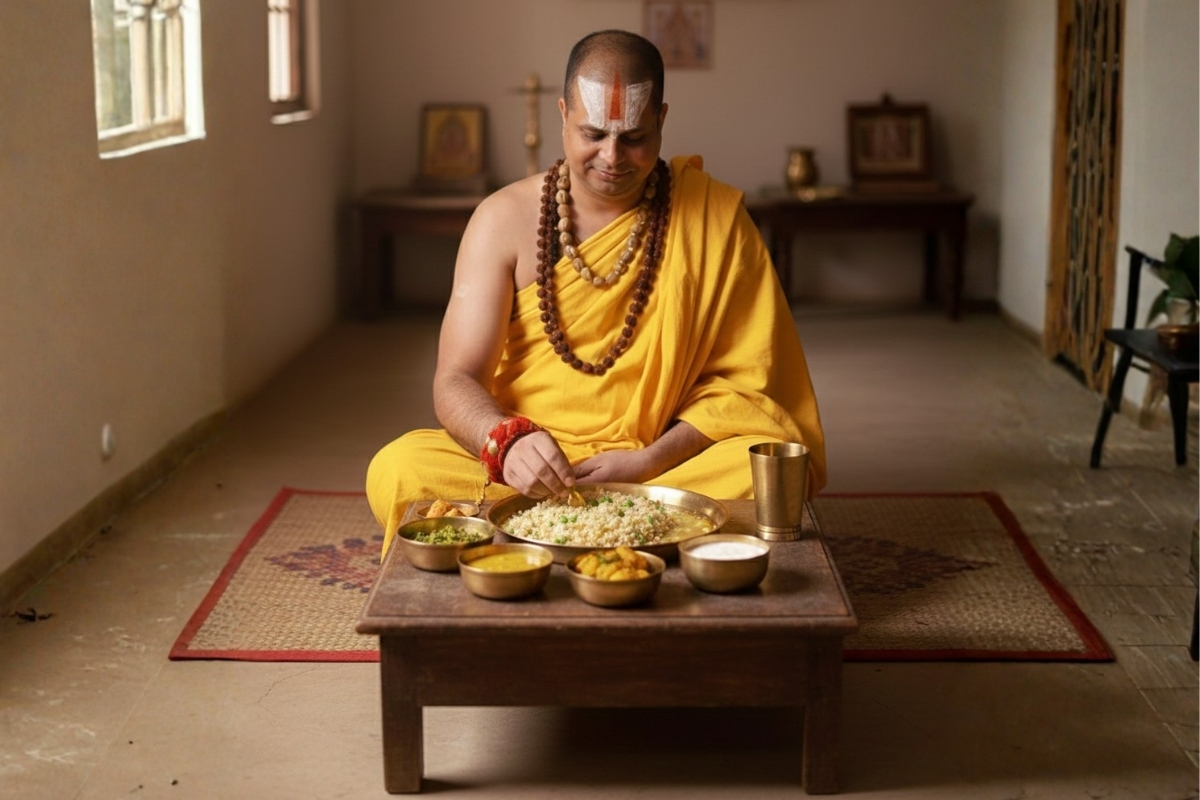
In Sanatan Dharma, actions are rarely merely symbolic; they represent spiritual practices designed to purify the mind and elevate consciousness. In Hindu tradition, food is never merely sustenance; it is sacred, a form of divine nourishment that carries spiritual weight far beyond its physical form.
Reaching an agreement outside of court is only half the journey. What truly matters is whether that agreement will stand the test of time. An estate planning lawyer ensures that the resolution your family worked so hard to reach is properly structured, clearly documented, and legally sound enough to withstand whatever comes next. To fully understand the importance of Brahman Bhojan in Hinduism, one must go beyond surface-level explanations.
What Is Brahman Bhojan?
Meaning of Brahman Bhojan
Brahman Bhojan is a meal offered out of deep respect for the spiritual knowledge that has shaped Hindu tradition for thousands of years, not out of obligation. It’s not enough to only feed someone. It is a living way to show respect for the dharmic thread that connects generations, as well as for respected knowledge and ancestry.
The scriptures define a Brahmin as a person who has devoted their life to learning and defending the Vedas. They are very smart. Giving someone food shows that you care about them and want them to live. The Brahman Bhojan vidhi says that every part of the offering is equally important and sacred. This is not charity. It is reverence, expressed through the most humble and human of acts, the sharing of a meal.
Spiritual Concept Behind the Ritual
The philosophical foundation of this ritual rests on gratitude. Hindu scriptures repeatedly emphasise that knowledge sustains society. By offering food with humility, the host acknowledges the role of sacred wisdom in preserving dharma.
The Religious importance of Brahman Bhojan lies in recognising that service performed without ego refines the heart. The offering becomes a spiritual act aimed at inner purification and the accumulation of merit, often described as Punya from Brahman Bhojan.
Religious Significance of Brahman Bhojan in Hinduism
Brahman Bhojan is important in Hinduism for reasons beyond mere social ones. It consists of spiritual discipline, ancestral rituals, and the balance of karma. During Shraddha, the Brahman Bhojan commemorates the deceased ancestors. People think that sincere offerings help them find peace and grow spiritually. Brahman Bhojan during Pitru Paksha is also very important, as this time is set aside to remember and thank one’s ancestors.
They are also associated with the practice of eliminating bad karma in Hindu rituals. People think that doing things out of humility and service can lessen the weight of past actions. When done with the right intention, Brahman Bhojan for peace and prosperity becomes a spiritual call for harmony in the home. These sorts of things aren’t superstitions. They are based on hundreds of years of reading the scriptures and following traditions.
When Is Brahman Bhojan Performed?
The ritual is performed during specific religious occasions involving spiritual completion or ancestral remembrance. These include:
- Brahman Bhojan during Shraddha
- Brahman Bhojan in Pitru Paksha
- Brahman Bhojan after pooja
- Brahman Bhojan after havan
- Brahman Bhojan during festivals
After a holy ceremony, like Brahman Bhojan after pooja, the offering is a way to express gratitude for divine blessings. Brahman Bhojan, after the havan, is a way to conclude the fire ritual respectfully. During festivals, Brahman Bhojan makes the event more auspicious. Every situation strengthens the link between what you do and what you want to do.
Ritual Meaning and Symbolism
Every element of Brahman Bhojan in Hinduism carries a symbolic meaning. The food must be sattvic, prepared in a calm environment, and offered respectfully. The ritual embodies humility and surrender.
| Component | Symbolic Interpretation |
| Sattvic Meal | Purity of thought and conduct |
| Respectful Hospitality | Acknowledgement of sacred wisdom |
| Invocation of Blessings | Alignment with divine grace |
| Ancestral Intention | Continuity of family lineage |
By doing brahman bhojan, the devotee learns to put others before themselves. The ritual subtly shifts the focus from what each person wants to what is best for the whole group. The symbols mean more than abstract. It teaches discipline and living in the moment.
Spiritual and Religious Benefits of Brahman Bhojan
The main benefits of Brahman Bhojan are spiritual. Scriptural teachings say that doing this is a way to become more humble and follow dharma better. People say that feeding Brahmins helps them find inner peace, which is one of the most well-known spiritual benefits. Giving food with a true heart breaks down pride and builds compassion. People who wish to earn Punya from it say that it helps them spiritually.
The ritual is also connected to Brahman Bhojan for peace and prosperity, not as a material promise but as a harmonising influence within the household. By performing sacred acts correctly, families foster a disciplined spiritual environment. In addition, such service is traditionally linked to the Removal of negative karma Hindu rituals, as selfless action purifies intention. The benefits, however, arise from authenticity. Mechanical performance yields little spiritual depth.
Religious Rules to Follow in Brahman Bhojan
To maintain sanctity, it is important to follow the Brahman Bhojan rules. The ritual must be done with discipline and honesty. Traditional rules stress:
- Preparation in a state of physical and mental purity
- Use of sattvic ingredients
- Adherence to proper Brahman Bhojan vidhi
- Respectful conduct throughout the offering
- Concluding with gratitude and blessings
The host’s demeanour matters as much as the meal itself. People should be polite when they talk, and the room should be calm. These Brahman Bhojan rules make sure that the act has real spiritual meaning and isn’t just a formality.
Difference Between Brahman Bhojan and Annadan
Both Brahman bhojan and Annadan seva involve giving food, but they are done for different reasons and in different places.
| Aspect | Brahman Bhojan | Annadan Seva |
| Focus | Honor of Vedic scholarship | Compassion toward society |
| Setting | Ritualistic and scriptural | Charitable outreach |
| Timing | Linked to religious ceremonies | Can be performed at any time |
| Spiritual Context | Ancestral and dharmic duty | Universal service |
Annadan seva represents feeding individuals as an act of compassion. It is widely praised in scriptures as one of the highest forms of charity.
In contrast, Brahman Bhojan in Hinduism is a ritual offering rooted in tradition and lineage. Itemphasisess reverence for sacred knowledge and ancestral continuity. Both practices uplift society. Yet their spiritual frameworks remain distinct.
Preserving Tradition with Understanding and Guidance
Sacred rituals demand awareness. Without understanding, tradition becomes routine. With knowledge, it becomes transformative. The Religious importance of Brahman Bhojan lies in its ability to connect action with consciousness. It teaches gratitude, humility, and reverence for wisdom.
To understand what Brahman Bhojan means, you need to read the scriptures. Jagadguru Swami Shri Satishacharya Ji Maharaj is a well-known spiritual leader, teacher, and social reformer. He has spent his whole life teaching people the importance of following the rules of dharma. The importance of following His lessons not only teaches you how to do rituals, but they also tell you why you should do them. They explain why they are important to you on a deeper level. If you go to Brahman Bhojan with a wish to do so, it becomes more than just a ritual. It becomes a spiritual gift that helps you better understand your purpose and feel more connected to Sanatan Dharma.