Across India, these three words have been spoken in homes, temples, and gurukuls for thousands of years. Children in Noida hear them from their grandparents on quiet winter mornings. Families in Varanasi and Lucknow carry them into prayer, into grief, and into the biggest decisions of their lives. Yet when most people are pressed to explain what Dharma, Karma, and Moksha truly mean, the answer runs thin. The words feel familiar. The understanding, less so.
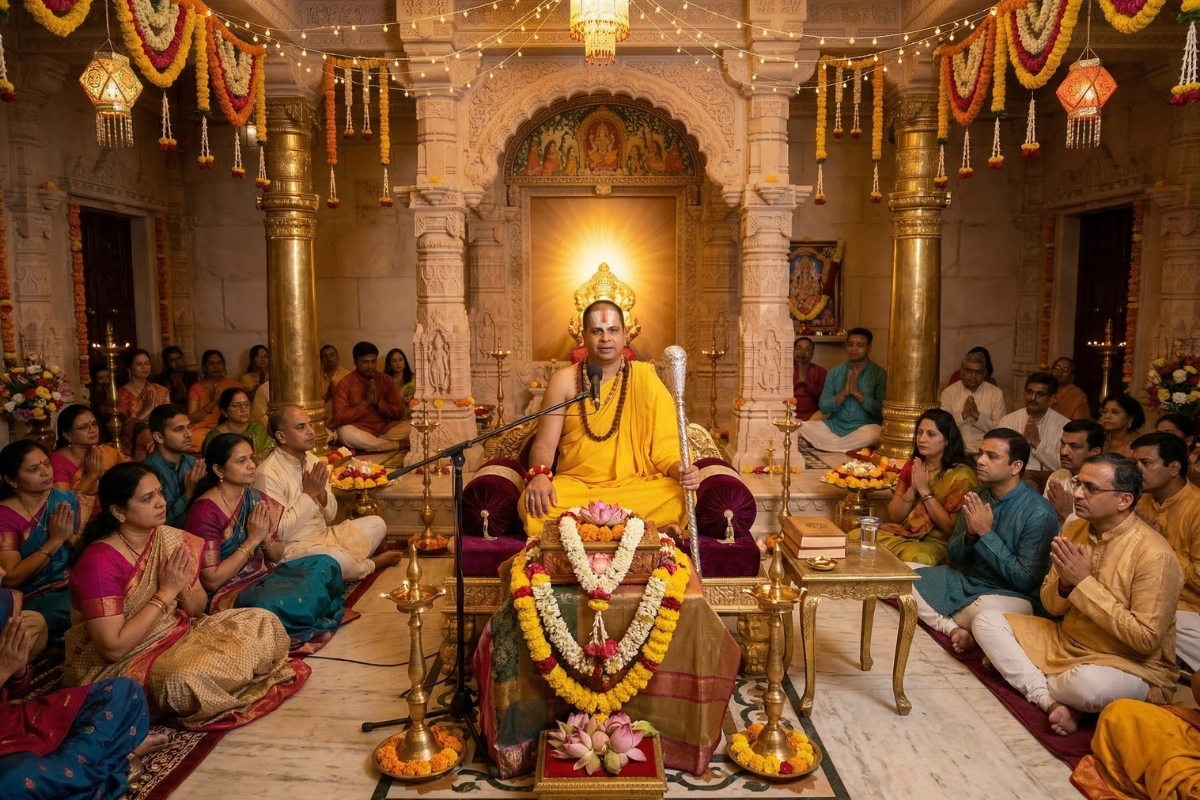
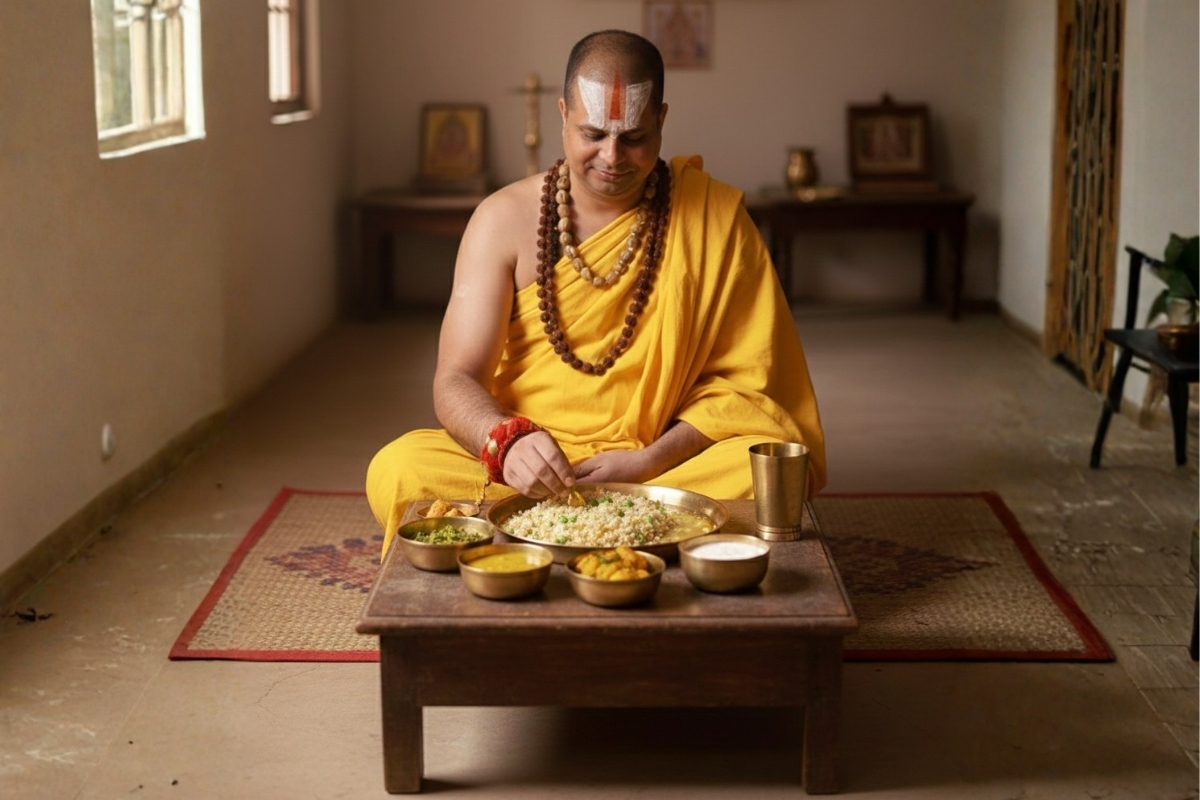
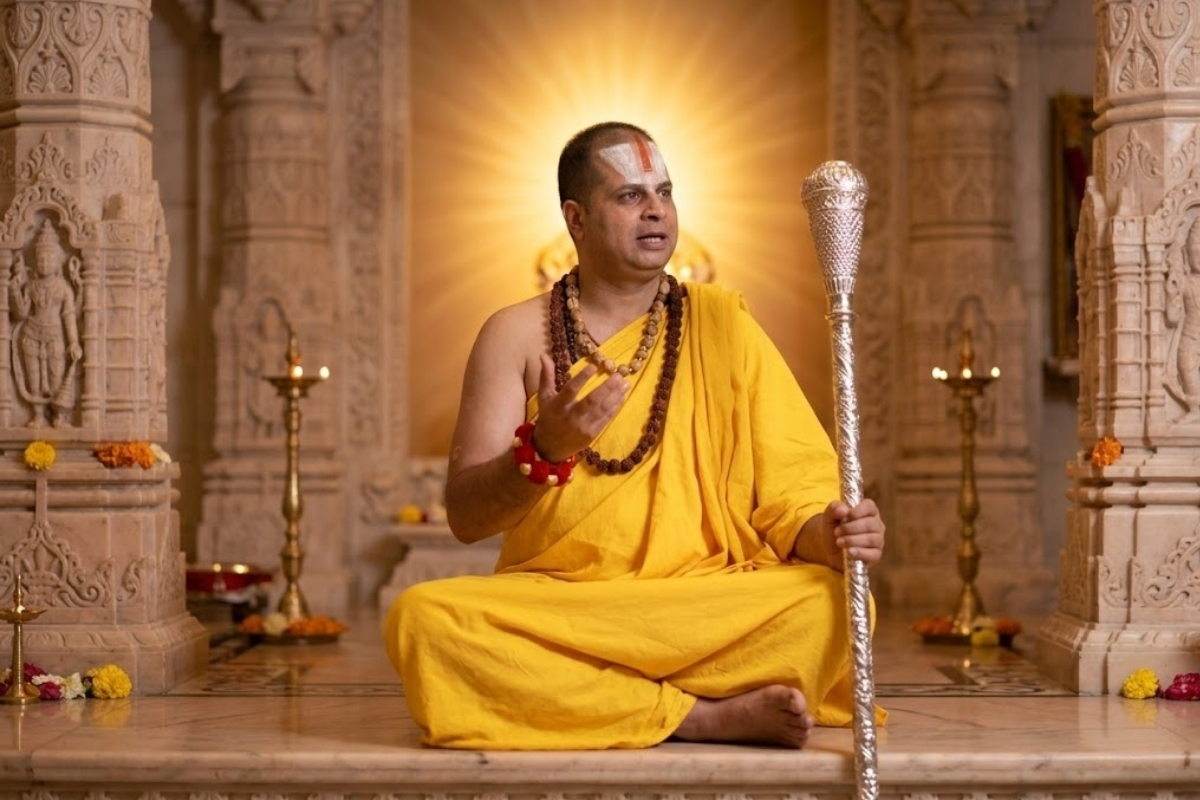
This is the gap that Jagadguru Swami Shri Satishacharya Ji Maharaj addresses through his teachings at the Maharshi Ashram in Noida Sector 110.
Through Ram Kathas and Vedic discourses, he has given lakhs of people across Delhi NCR and Uttar Pradesh a clear, grounded understanding of the sanatan way of life — not merely as ritual, but as a complete guide to how a person should think, act, and live.
Understanding Sanatan Dharma: The Eternal Way of Life
“Sanatan” means that which has no beginning and no end. “Dharma” does not translate cleanly into English; it is closer to the cosmic order that holds all life together. Sanatan Dharma, then, is not a religion in the limited modern sense. It is a complete way of existing in the world, one that connects the individual to nature, to society, and to the divine.
Vedic philosophy has survived every era not because it was rigid but because it was built around truth. It invites inquiry rather than demanding blind acceptance. For someone living in modern India, pulled between professional ambition and the desire for inner steadiness, the teachings of Sanatan Dharma offer a framework that no productivity method or self-improvement trend can match.
What Is Dharma? (Righteous Duty)
Dharma comes from the root “dhr,” meaning “to hold” or “to sustain”. Hindu dharma, meaning, in daily terms, refers to the principles that keep both the individual and the world they belong to in balance. It is not a fixed rulebook. It is an honest understanding of what your specific role at this point in life actually requires of you.
Personal Dharma: Your Role and Responsibility
Every person’s Dharma is shaped by who they are and where they stand in life. The tradition calls this Svadharma.
- A parent’s responsibility to a child is not the same as a student’s responsibility to a teacher.
- Someone who leads a household carries obligations that a person living alone does not.
- A person in good health has a different capacity for service than someone unwell.
The Bhagavad Gita teachings on Dharma address this directly. When Arjuna refuses to act at Kurukshetra, Sri Krishna does not hand him a universal rule. He asks Arjuna to understand his own position and the cost to the people who depend on him of his withdrawal. This is Dharma in Sanatan Dharma in its clearest form: not abstract virtue, but grounded accountability to one’s actual life.
Beyond individual roles, universal principles like truthfulness, non-violence, and compassion apply to everyone. Ancient Indian spirituality understands these not as obligations imposed from outside but as qualities that emerge naturally when a person stops acting against their own deeper nature. Moral duty in Hinduism is recognised from within, not enforced from without.
What Is Karma? (Law of Action and Consequence)
Karma in Hinduism is perhaps the most talked-about and least understood concept in all of Vedic thought. Popular culture treats it like a cosmic reward system, but that misses the real meaning. Karma means action, and it includes both the intention behind the action and the consequence that follows from it.
The importance of Karma in daily life becomes clear when you accept one truth: nothing you do disappears. Every action leaves an impression on the world and, more importantly, on the person who performed it.
The Three Forms of Karma
| Type of Karma | What It Means | When it manifests |
| Sanchita Karma | Total store of actions across all past lives | Held in reserve, not yet active |
| Prarabdha Karma | The portion playing out in this lifetime | Your present circumstances |
| Kriyamana Karma | Actions you are performing right now | Shapes your future experience |
This framework answers a question many carry quietly: why do honest people sometimes suffer while those who act poorly seem unaffected? Prarabdha Karma, already set in motion from the past, plays out as it must. But Kriyamana Karma is entirely yours to shape. The cycle of birth and death, Samsara, continues until the accumulated weight is resolved. This is not fatalism. It is the most serious form of personal agency.
What Is Moksha? (Liberation)
Moksha is widely heard as withdrawal from the world or some kind of ending. It is neither. Spiritual liberation in Hinduism is the state in which the soul, or Atman, is no longer compelled to return to the cycle of rebirth because all unresolved Karma has been worked through. The Atman recognises its true nature as inseparable from Brahman, the underlying reality of all existence. This is the Atman-Brahman relationship made fully conscious, and it is what reincarnation in Hinduism builds toward across lifetimes.
Four Paths That Lead to Moksha
The Hindu way of life recognises that people have different natures and offers four routes to the same destination:
- Jnana Yoga works through direct inquiry into the nature of the self until self-realisation in Hinduism becomes a lived recognition rather than a concept.
- Bhakti Yoga works through devotion, where complete love for the divine gradually dissolves the separation between the individual soul and Brahman.
- Karma Yoga works through action performed without attachment to outcomes, so that deeds no longer bind the soul to future consequence.
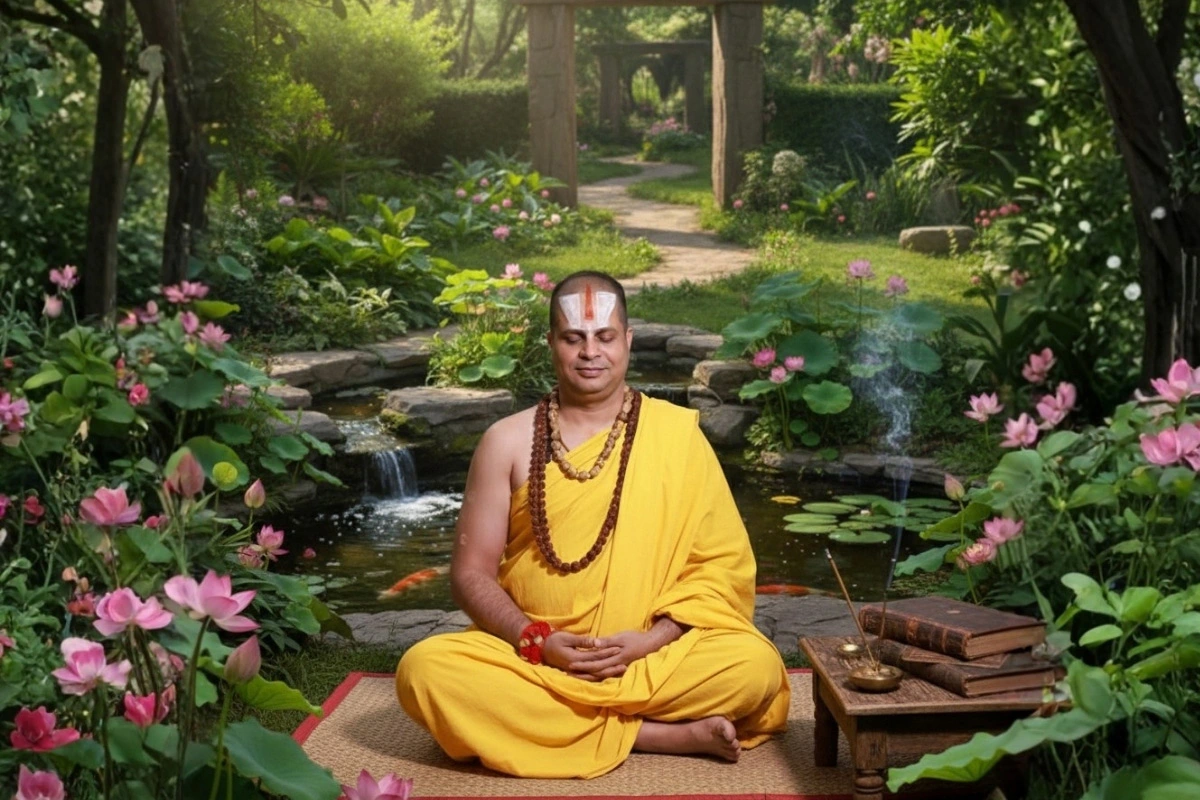
- Raja Yoga works through meditation and inner discipline, steadying the mind until the Atman becomes evident.
How Dharma, Karma, and Moksha Are Connected
These three form a continuous process, not three separate ideas. Dharma gives a person the right direction. When you act from genuine duty, your actions produce Karma that is cleaner and less binding. Over time, that Karma either draws the soul deeper into Samsara or begins to lighten the load. Moksha becomes available when that load resolves and the Atman no longer mistakes itself for something separate from Brahman.
The Bhagavad Gita holds all three in one teaching: fulfil your Dharma completely, without clinging to results. That instruction, lived sincerely, is the meaning of life in Hindu philosophy in its most practical form.
Why These Teachings Matter in Daily Life Today
People living in Noida, Delhi, Lucknow, Prayagraj, and across north India face the same difficulty: the pressure to move fast, accumulate more, and perform constantly, with very little time to ask whether any of it is pointing in a worthwhile direction.
Sanatan Dharma teachings do not ask anyone to leave their career or family. They offer a shift in how you act and why. A person who takes Karma seriously stops cutting corners because they understand that every action shapes what comes next. A person who lives by Dharma stops making decisions purely from desire and starts asking what their role genuinely requires of them. Moksha is not only for monks. Every honest act, every selfless decision, every moment of living the sanatan way of life without self-seeking, is a movement in that direction.
Walk This Path With Guidance That Goes to the Root
Reading about these concepts is a beginning. Carrying them into actual life is something that grows in the presence of a teacher who has walked this path himself.
Jagadguru Swami Shri Satishacharya Ji Maharaj guides seekers into the lived depth of Sanatan Dharma through Ram Kathas, Vedic teachings, and the ongoing work of the Maharshi Ashram in Noida Sector 110. His discourses have reached devotees from across Delhi NCR, Uttar Pradesh, and far beyond, offering not abstract theology but practical, rooted wisdom that changes how people actually live.
Contact to attend an upcoming Katha, explore his teachings on ancient Indian spirituality, or connect with the ashram. The path begins with one sincere step.