

The meaning of Sanatan Dharma is often misunderstood because it is presented as a belief system rather than what it truly is—a framework for living consciously. The word Sanatan means eternal, that which exists beyond time and change. Dharma means moral duty and righteousness, the principle that sustains order within the individual and society.
Sanatan Dharma is not a religion in the conventional sense. Doctrines, boundaries, and membership typically define a religion. Sanatan Dharma operates differently. It is a timeless philosophy that asks fundamental questions: How should one live? How should one act when faced with conflict? What governs right and wrong? These questions are not theoretical. They are practical, lived, and constantly relevant.
What makes Sanatan Dharma universal is its freedom from limitation. It does not belong to a specific group, era, or identity. Its teachings apply wherever human life exists because they address universal truths—duty, responsibility, consciousness, suffering, and the liberation of the soul.
Ancient texts affirm that truth is singular, even when expressed in many forms. Another teaching emphasises that righteousness protects those who uphold it. These ideas define the Sanatan way of life—not belief without reason, but living in alignment with the eternal values of Sanatan Dharma.
Sanatan Dharma developed through the realisations of enlightened sages. It has no founder because it did not begin as a movement. Its continuity lies in lived wisdom, refined in ages.
The Vedas are the beating heart of Sanatan Dharma. They speak to us about the universe’s rhythm, our duties to one another, and how to live with awareness.
Through tales and symbols, the Puranas share India’s ageless wisdom, bringing moral and spiritual lessons within everyone’s grasp.
The Upanishads focus on inner inquiry. They examine the nature of the self, consciousness, and the journey to self-realisation and devotion.
The Bhagavad Gita addresses ethical conflict and duty. It transforms philosophy into practical action, offering clarity during moral uncertainty.
Sanatan Dharma teachings exist to solve a real problem: how to live ethically while navigating desire, responsibility, and change. They provide structure without rigidity and discipline without suppression.

Dharma defines moral duty and righteousness. It leads to personal behaviour and social responsibility with integrity and compassion. Dharma is adaptable. It considers one’s role while maintaining ethical clarity. This adaptability is why it remains relevant.
Karma establishes accountability. Every thought, word, and action creates an outcome. This principle eliminates victimhood and encourages ethical decision-making. Mindful action and selfless intent support soul evolution and enlightenment.

Moksha is freedom from inner bondage. It is liberation from attachment, fear, and ignorance. Achieved through knowledge, devotion, and righteous living, Moksha represents inner stability and clarity—the highest aim of Sanatan Dharma.
Ahimsa, non-violence in daily life, and Satya, truthfulness, form the ethical spine of dharmic living. Together, they promote trust, restraint, and moral strength.

This idea acknowledges interdependence. It excels in conflict and division by promoting empathy, tolerance, and respect for all people.
Everything we do is rooted in dharma. Ambition succeeds when you act with honor and compassion.
Artha addresses material responsibility. When guided by Dharma, it supports stability and progress without ethical compromise.
Kama acknowledges human desire for joy and fulfilment. Balanced by ethics, it contributes to emotional well-being and harmony.
Moksha completes the journey. It integrates material and spiritual life into a path of inner freedom and fulfilment.
Sanatan Dharma encourages discipline, awareness, and restraint through consistent daily practice.
Principles of dharmic living guide choices rooted in responsibility rather than impulse.
These practices help us stay grounded and keep our emotions steady, letting us grow through dharma.
Selfless service deepens our moral and spiritual grounding while bringing people closer together.
Living the Sanatan way brings our lives into harmony with nature and the universe's flow.
Sanatan Dharma rerecogniseshat knowledge alone is insufficient. Guidance is essential. The guru–shishya parampara ensures that wisdom is transmitted with discipline and clarity. A spiritual guru in Sanatan Dharma helps remove confusion, correct misunderstandings, and guide ethical application. The guru does not replace personal effort but sharpens it, offering direction on the journey to self-realisation.
Sanatan means eternal. Dharma means moral duty. Together, they describe something closer to a code of conduct than a religion, a framework for how you live, act, and relate to the world. Not what you believe in, but what you do each day.
Most religions have a founder, a fixed doctrine, and a clear line between who’s in and who’s out. Sanatan Dharma doesn’t work that way. It starts with questions about how you should live, how you act when things get hard, and how you know right from wrong. Those aren’t questions for a closed group. They’re questions every person eventually faces.
Sanatan Dharma has no founding moment, no single person who started it. It grew through the realisations of sages across many generations. The Vedas, Upanishads, Puranas, and the Bhagavad Gita hold that knowledge preserved not just in writing, but through an unbroken line of practice that continues today.
In the teachings of Sanatan Dharma, duty, accountability and purpose are discussed:
Sanatan means eternal. It points to something that exists beyond time, beyond change. Sanatan Dharma isn’t tied to any era, any group, any identity. Duty, responsibility, consciousness, the liberation of the soul. These aren’t ideas invented for a particular age or people. They’ve always applied. They still do.
The Sanatan way of life is practised through daily discipline:
Sanatan Dharma does not belong to any caste, region, or community. Its universal principles of karma, righteous living, and devotion apply to every human being. Because it addresses questions relevant to all of life, any sincere seeker can walk the spiritual path it offers.
The two are closely connected. Hinduism is the external label given to the civilisation of Bharatvarsha. Sanatan Dharma is its self-description from within the Vedic tradition. Ancient Indian philosophy goes back to the Upanishads and the Bhagavad Gita. These texts laid the groundwork for how millions of people have thought about consciousness, duty, and the nature of reality for thousands of years.
The main scriptures are:
Modern life raises real questions about who you are, what you owe others, and how to act with integrity. Sanatan Dharma has been working through those questions for centuries. Karma builds accountability. Meditation steadies the mind. Dharma gives you a framework for decisions in relationships and responsibility. For seekers across Bharat today, it still holds up.
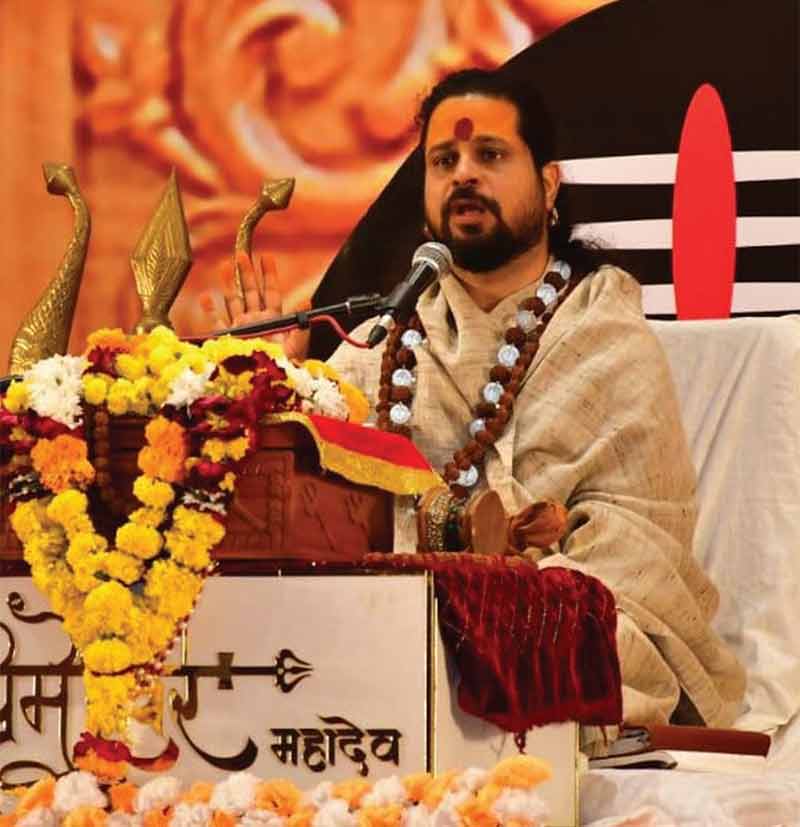
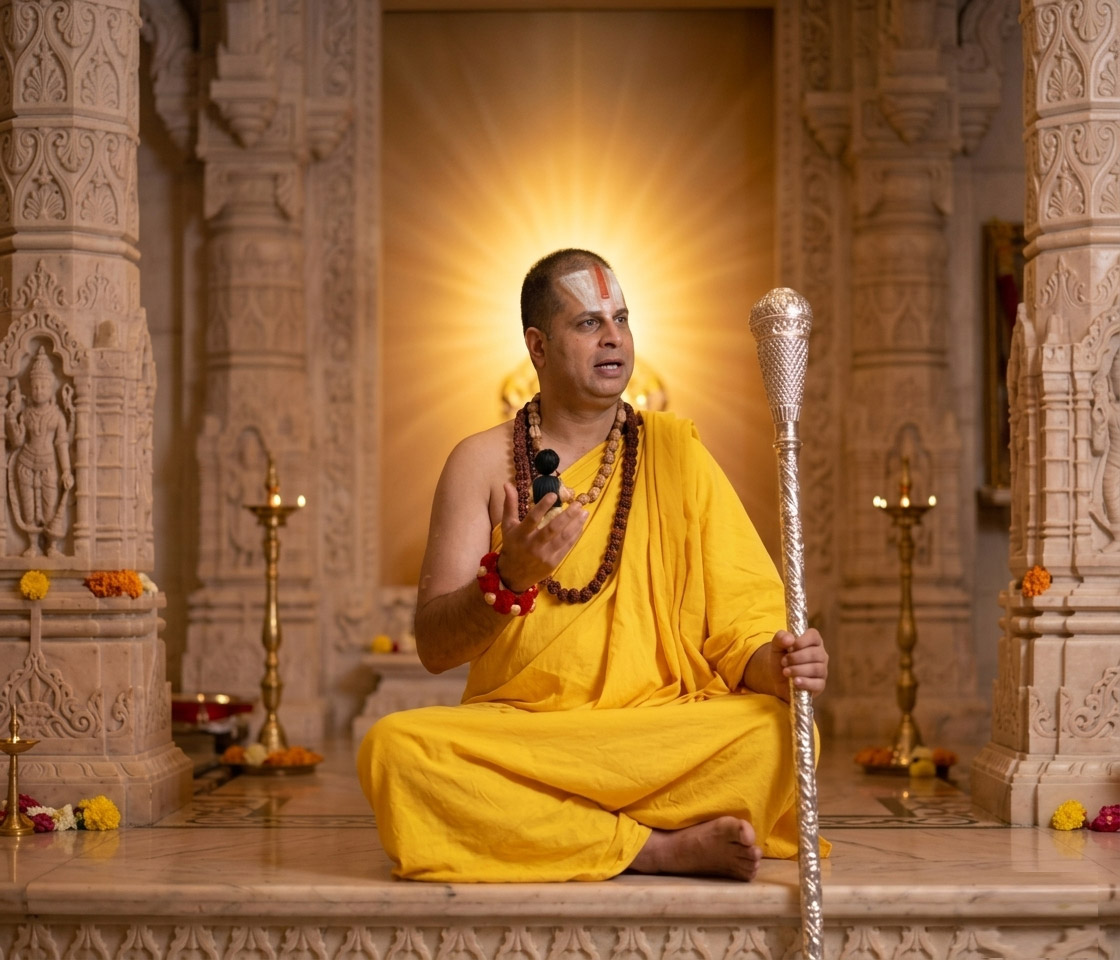
Jagadguru Swami Shri Satishacharya Ji is involved in Katha and Gurukul education, is conducting meditation programmes and has written books on Vedic wisdom and yoga and Sanatan Dharma. His work ranges from social services work to continued programmes in India.
For more information on how he can help with your mission, please contact him today.