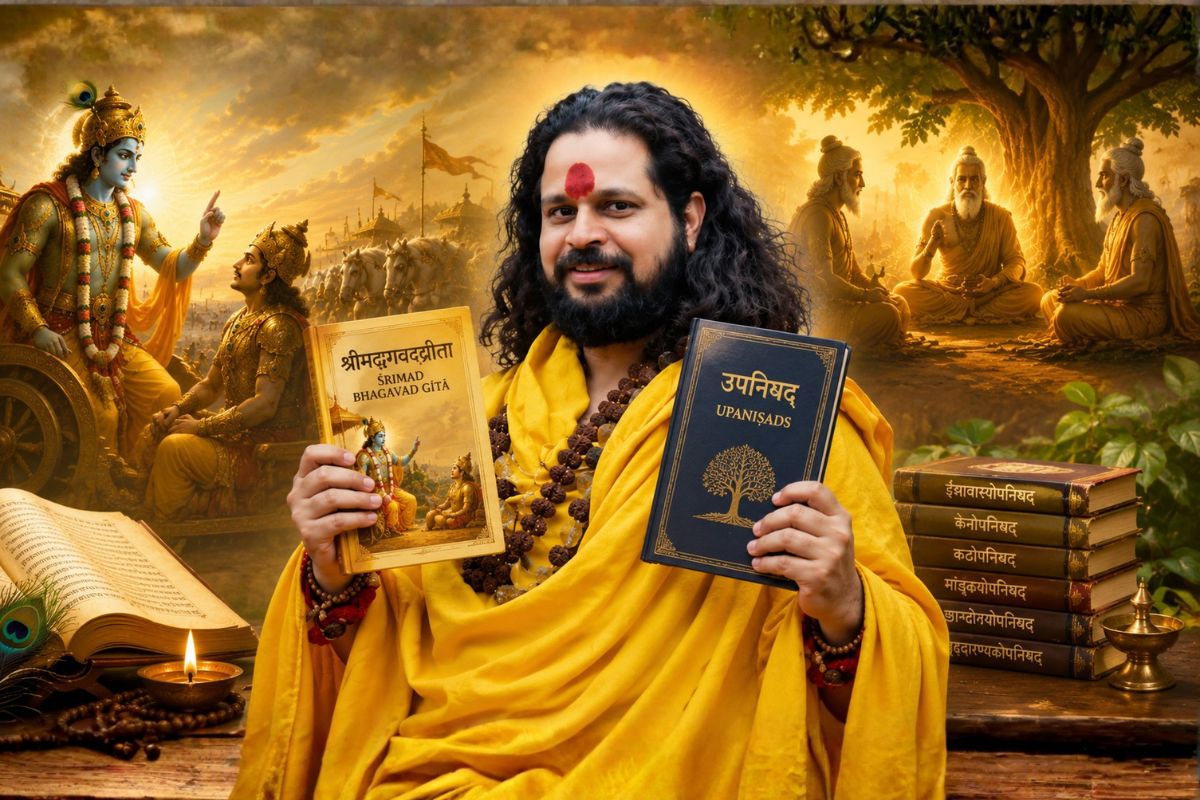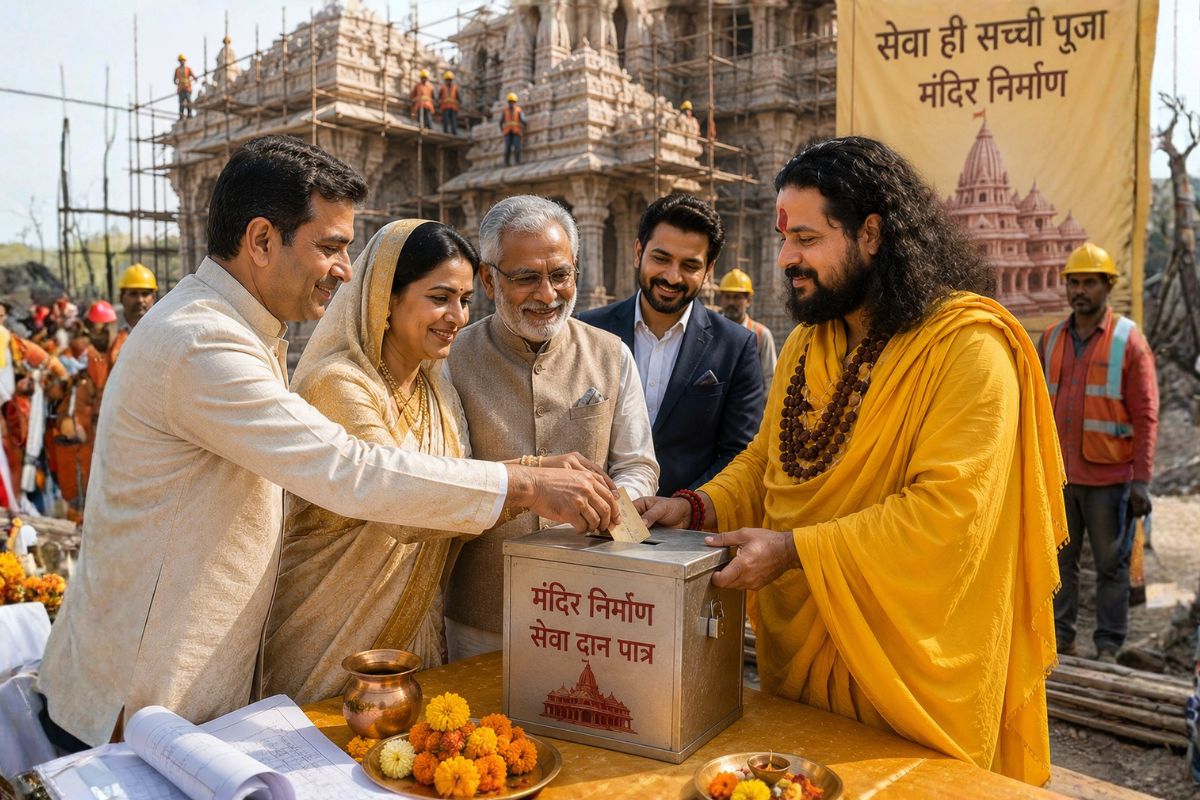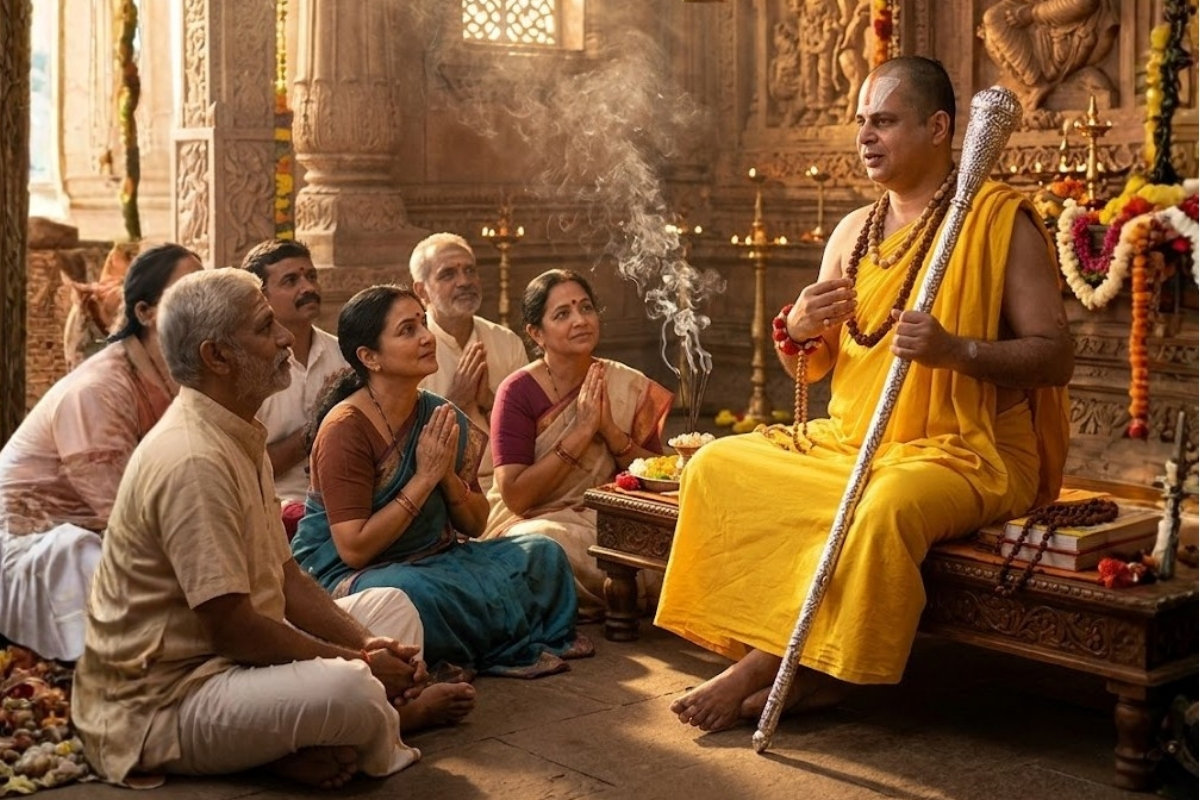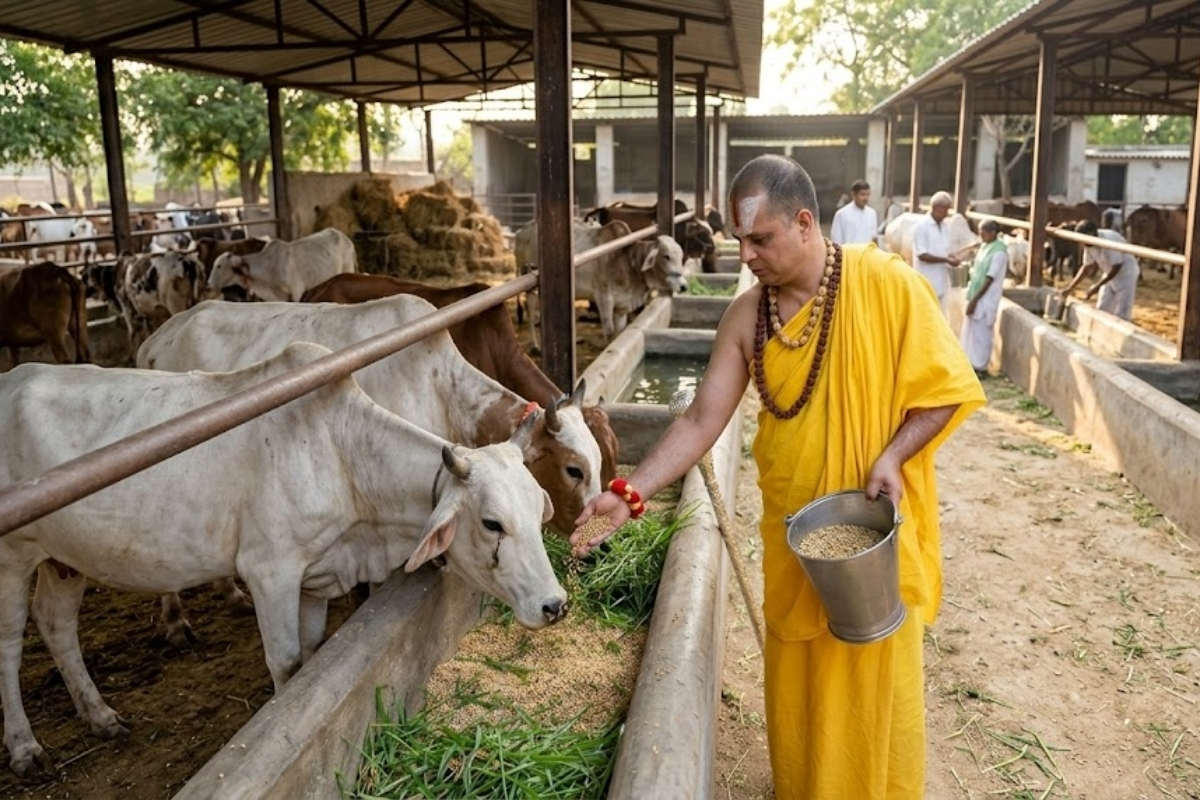
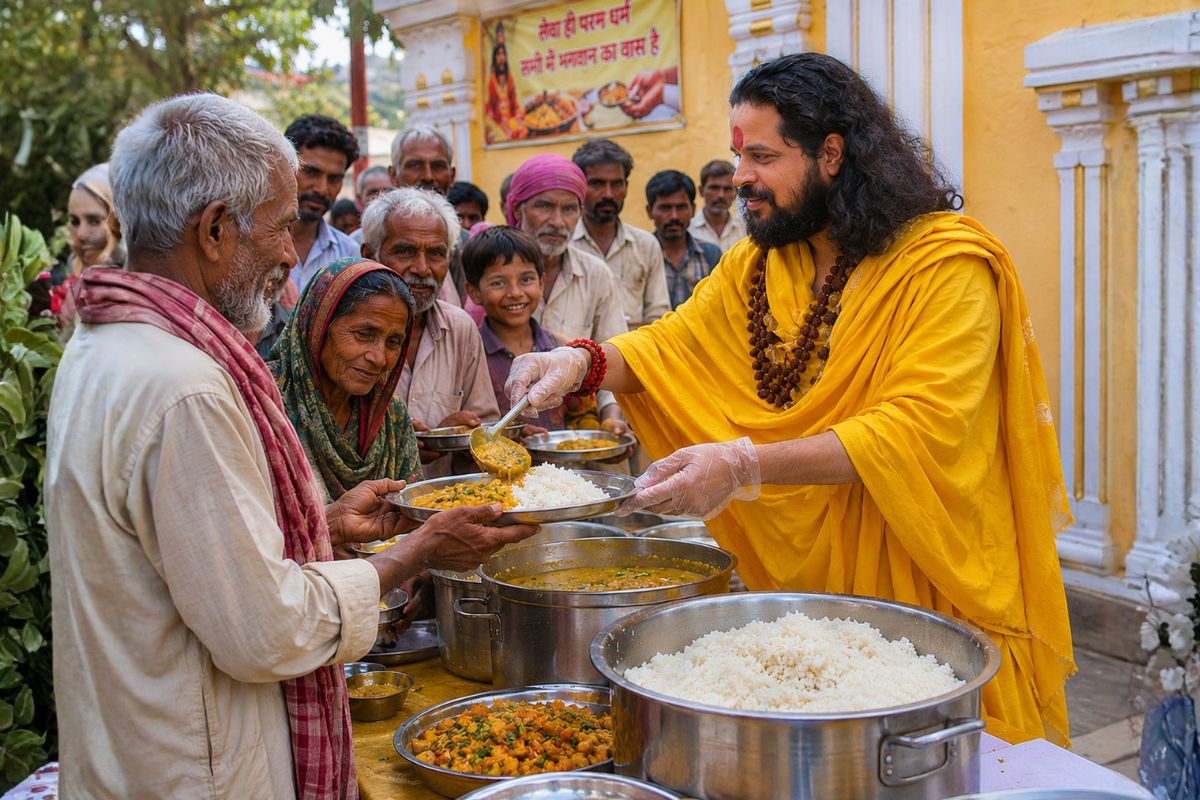
In Sanatan Dharma, food is not only sustenance. The Taittiriya Upanishad declares Annam Brahma — food is God. When you feed a hungry person, you are offering worship to the divine presence within them. This understanding is why food donation has always occupied the highest place among all forms of charity in the Sanatan way of life.
This blog explores what Annadan Seva and Rasoi Seva mean, why Sanatan Dharma teachings regard them so highly, and how you can participate under the guidance of Jagadguru Swami Shri Satishacharya Ji Maharaj.
What Is Annadan Seva?
The word Annadan breaks into two Sanskrit roots: anna, meaning food or grain, and daan, meaning the act of giving. Put together, it describes something more than a transaction — feeding another person as a duty you owe, not a favour you extend. Together, they describe the sacred act of feeding the hungry as a dharmic duty rather than optional generosity. This distinction matters in the Sanatan way of life. Food donation is not something you do when it is convenient; it is something the tradition asks of you because another person’s hunger is your spiritual responsibility.
What Our Scriptures Say About Annadan
The Mahabharata is explicit on this: feeding the hungry dissolves accumulated negative karma in ways no other act of giving can. The Vishnu Purana goes further, stating that punya earned through anna daan protects the donor’s lineage across generations. These are not symbolic statements. They reflect a worldview in which every living being carries the divine, and feeding that being is an act of reverence.
Why So Many Devotees Feel Disconnected from This Practice
Many people across India genuinely want to live a dharmic life but find themselves uncertain about where to begin. Annadan Seva removes that uncertainty entirely. It does not demand prior knowledge of ritual, an auspicious muhurat, or any special preparation. It asks only for sincerity and the willingness to act. This accessibility is precisely why Sanatan Dharma teachings have always placed food donation at the centre of dharmic charity practices.
What Is Rasoi Seva?
Rasoi Seva is a service in a temple kitchen or community kitchen. Unlike Annadan Seva, which is fulfilled through donation, Rasoi Seva asks you to show up with your hands. You chop, you stir, you serve. The act of cooking for others without expectation is itself a form of worship, and that is something no bank transfer can replicate.
Forms of Rasoi Seva
- Cooking meals for pilgrims, elderly devotees, and those who would otherwise go without
- Serving food at Ram Kathas, festivals, and community gatherings at the ashram
- Contributing ingredients or kitchen essentials so that the daily cooking can continue
- Giving your time in the ashram kitchen for the preparation of prasad
Why Cooking for Others Is a Form of Karma Yoga
The Bhagavad Gita teaches that selfless action performed without attachment to reward purifies the mind and brings one closer to the Divine. Rasoi Seva is this teaching made concrete. A devotee who cooks and serves a meal without expecting recognition is practising karma yoga in its most immediate form. When that food is first offered to the Divine and then distributed as prasad, the act of feeding others becomes an unbroken chain of worship from the kitchen to the plate.
Why Food Charity Holds the Highest Place in Sanatan Dharma
Other forms of donation, such as gold, land, and wealth, are honoured in our tradition. Food, however, occupies a different position because it addresses the most basic and urgent dimension of suffering. A cold person can find warmth. A tired person can rest. A hungry person cannot wait. Since Anna sustains prana (the life force itself), donating food means nourishing the divine spark within another living being. No other form of charity works at this level.
The highest forms of charity in Sanatan Dharma are those that protect life while preserving the dignity of the person receiving them, and food donation achieves both simultaneously.
Spiritual Significance of Annadan Seva and Rasoi Seva
| Seva | Spiritual Benefit | Scriptural Source |
| Annadan Seva | Dissolves negative karma | Mahabharata |
| Annadan Seva on Shradh tithi | Brings peace to ancestors (pitru shanti) | Vedic tradition |
| Annadan Seva | Invites the blessings of Annapurna Devi | Puranic tradition |
| Rasoi Seva and Prasad Seva | Purifies the mind through selfless services in Hinduism | Bhagavad Gita |
| Temple Food seva | Earns punya that protects the family lineage | Vishnu Purana |
Families who make Annadan Seva a regular practice, particularly on Ekadashi, Amavasya, Pitru Paksha, and death anniversaries, carry forward a tradition that connects personal dharma to the well-being of ancestors and future generations alike.
Social Benefits of Annadan Seva and Rasoi Seva
Hunger is not an abstract problem in India. Daily-wage workers, migrant families, elderly individuals, and students from low-income households regularly go without full meals, not out of choice but out of circumstance. Organised feeding seva through a trusted institution, such as Maharshi Ashram, addresses this gap with consistency and care.
When you give through an established ashram, the meal that reaches someone is not just food — it is prasad, prepared with care and offered with dignity. Sporadic charity feeds a person once. Food seva in Sanatan Dharma builds something ongoing, where the hungry are fed consistently, and the giver earns punya with every act. The Anna Daan benefits are mutual: one person’s hunger is met, and another person’s dharma is fulfilled.
How to Participate in Annadan Seva
Jagadguru Swami Shri Satishacharya Ji Maharaj has made Annadan Seva accessible to every household through Maharshi Ashram’s online donation process. You can participate from anywhere across India without visiting in person.
- Visit jagadgurusatishacharya.org/annadan-seva and select the number of people you wish to feed
- Declare your sankalp, including the name and occasion in whose honour the seva is being performed.
- The ashram prepares and distributes the meal in your name as prasad under Guruji’s guidance.
Annadan Seva can be offered on birthdays, Shradh tithis, Ekadashi, Ram Navami, Kartik Maas, and as a business sankalp. Each occasion carries its own spiritual merit within the broader framework of dharmic charity practices.
Begin Your Annadan Seva Today
How to Participate in Rasoi Seva
Rasoi Seva requires direct, in-person involvement and is best experienced at Maharshi Ashram, Noida. If you are based in or near the NCR, this is one of the most grounded ways to bring food seva in Sanatan Dharma into your own life.
- Volunteer your time in the ashram kitchen during festivals, kathas, or regular cooking days.
- Sponsor ingredients for the day’s meal preparation as a form of temple kitchen seva
- Participate in the large-scale prasad distributions that take place during Ram Katha ayojans
- Bring community kitchen seva to your own locality with guidance from the ashra.m
Connect with Maharshi Ashram to Begin Your Rasoi Seva
The Simplest Way to Live the Sanatan Way of Life
Annadan Seva and Rasoi Seva are not relics of a distant past. They are active, living expressions of what the teachings of Sanatan Dharma have always asked of its followers: see the divine in every person, meet their needs before your own comfort, and serve without expecting reward.
For anyone who wants to begin living the Sanatan way of life more fully, food donation is the most accessible place to start. Jagadguru Swami Shri Satishacharya Ji Maharaj and the team at Maharshi Ashram are here to guide that journey, one meal at a time.